Disclosure: we make SofaDeck, which is one of the options below. Facts about other products were checked on 16 October 2026 and can change.
A home-theatre PC needs something to type with: search boxes, passwords, the occasional settings window. A full desk keyboard and mouse on the sofa is clumsy. This guide covers the four kinds of HTPC keyboard, what to look for, and when the phone in your pocket is enough.
The four kinds
| Kind | Good for | Weak at |
|---|---|---|
| Compact keyboard with touchpad | Typing and pointing from one device on your lap | Small touchpad; not a remote for playback |
| Mini handheld keyboard | Quick searches with your thumbs | Anything longer than a search |
| Lap keyboard with trackball | Long sessions, browsing, light games | Big, and needs a place to live |
| Your phone (trackpad + keyboard app) | Short typing, clicking, playback and volume | BIOS and sign-in screen; long typing |
What to look for
- USB receiver over Bluetooth for a PC that's off a lot: it works from power-on, including the BIOS and Windows sign-in.
- Backlit keys if you watch with the lights off.
- Media keys (play/pause, volume) so you aren't hunting for Fn combinations.
- Rechargeable or long-life batteries. Keyboards that sit in a drawer for weeks should run on AAs or charge over USB-C.
- Range: 10 m is typical; a receiver on a short USB extension cable at the front of the PC helps if the PC is in a cabinet.
The long-running favourite is a compact touchpad keyboard such as Logitech's K400 Plus. See it and similar keyboards on Amazon, or mini backlit keyboards.
As an Amazon Associate we earn from qualifying purchases.
Or use the phone you already have
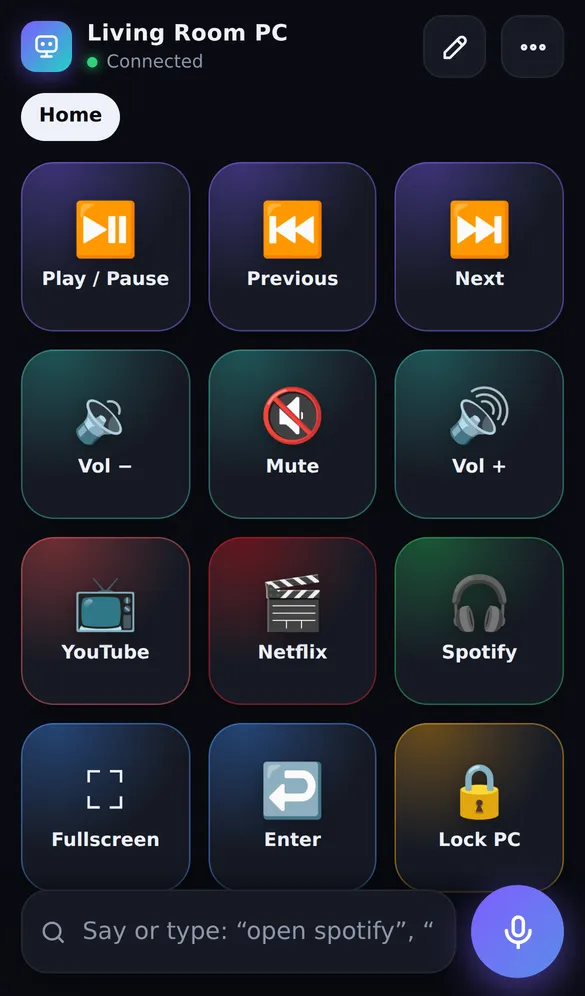
Most of what happens on a living-room PC isn't typing: it's play, pause, volume, fullscreen and opening the same few apps. SofaDeck puts those on big buttons on your phone, adds voice ("open Netflix", "volume 30") and, on Windows, a trackpad and keyboard screen for the moments you do need to type or click. It's free, and there's nothing to install on the phone.
 Direct installer .exe · 3.7 MB Store version signed by Microsoft No account Local network only Signed updates SofaDeck installs on your Windows PC. Your phone is the remote — it works in the phone’s browser.One email from support@dixonappstudio.com. No list unless you tick the box. PrivacyOr on your PC, go to sofadeck.com/get
A common setup is both: the phone for everyday control, and a cheap touchpad keyboard in the drawer for updates and the BIOS.
More for the living room: the best HTPC remote, remote controls for a PC compared and use your phone as a keyboard for your PC.
Frequently asked questions
What is the best keyboard for an HTPC?
A compact wireless keyboard with a built-in touchpad, so one device does typing and pointing from the sofa. Look for a USB receiver (no Bluetooth pairing after reboots), backlighting if you watch in the dark, and a range of about 10 m.
Bluetooth or USB receiver for an HTPC keyboard?
A USB receiver is usually better for a living-room PC: it works in the BIOS and at the Windows sign-in screen and doesn't need re-pairing. Bluetooth saves a USB port and can switch between devices.
Can my phone replace an HTPC keyboard?
For short typing and pointing, yes: SofaDeck's free trackpad and keyboard screen (Windows) types and clicks from the phone, and its buttons handle playback and apps. For long typing sessions or the BIOS, a real keyboard is still better.
Remotes for specific apps
- VLC remote: control VLC on your PC from your phone
- Kodi remote on your phone for a PC running Kodi
- All remotes by app